Artist Statement
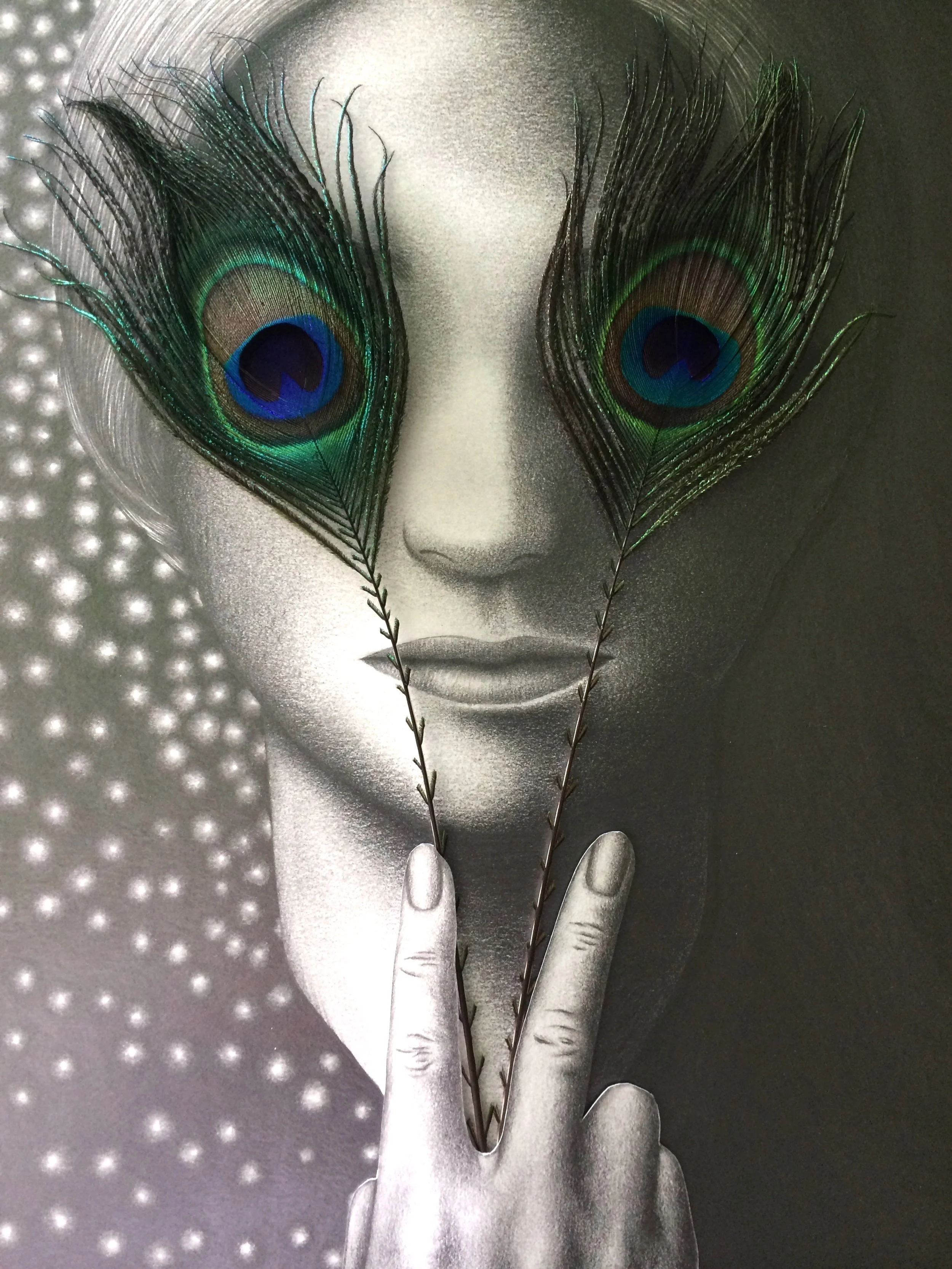
I paint solitary female figures with stiff, mask-like facial features. I paint these figures completely from imagination. I create harmony and contrast between volumetric figures, using sculptural collages, and two dimensional images for middle and background.
I combine flat and volumetric styles into one painting. Two-dimensional style is driven from my Japanese heritage, and three-dimensional one is from traditional Western paintings. It reflects the modern influence of Europe and America over Japan.
The figures are inspired by my autistic traits; people on spectrum develops social masks to cover our difficulty to make social interactions. It often leads to social anxiety and isolation. Living with this condition nurtured me to strongly aware of vulnerable individuals. The figures of my painting represent ambivalence of fear and comfort of isolation, social and mental vulnerability, and heavy masking. I explore the sociopolitical theme of diversity from my personal perspective.
My work is painted by repetitive gestures such as painting ornamental patterns, and my alternative use of paint and blur brushes for stroke by stroke. This labor intensive, repetitive mark making strengthens my individual identity. This process creates meditative comfort. The creation becomes assurance of my own self.
I directly communicate with viewers at deeply psychological level. I create a serene space for the viewers to contemplate their internal selves beyond the surface.